


Seminari su fisica neutronica di Pablo Torres Sanchez
Il Prof. Pablo Torres Sanchez dell'Università di Granada terra un ciclo di due seminari sulla fisica neutronica.
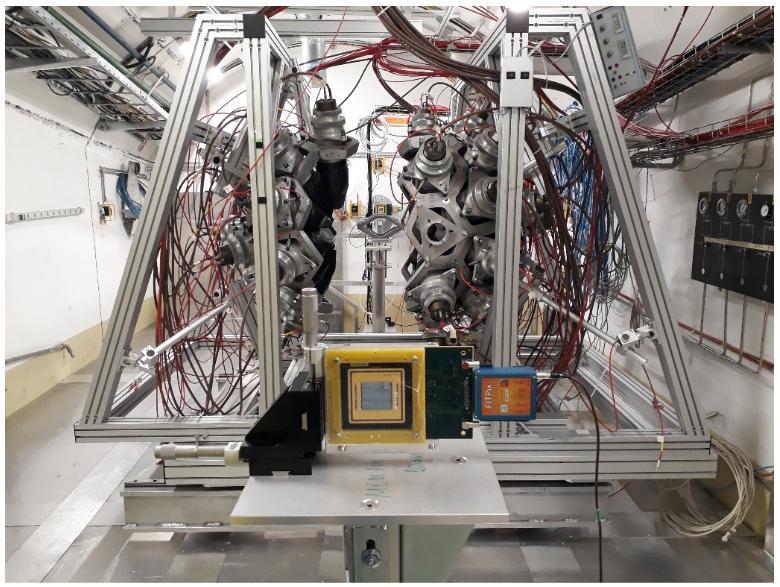
The neutron Time Of Flight (n_TOF) Facility is the neutron source at CERN. Highly energetic protons from the CERN accelerator complex collide with a lead target to produce, via spallation processes, large amounts of neutrons kinetic energies ranging from few meV to several GeV, and send to three experimental areas located at 185 m (EAR-1), 20 m (EAR-2) and 3 m (NEAR station) from the spallation target. At these locations, neutrons are used to study neutron-nucleus interactions of great importance in a wide variety of research fields. This seminar will provide an overview of the research activities performed at n_TOF, ranging from fundamental nuclear physics studies such as symmetry breaking effects in compound nuclei and nuclear level densities to broad applications as astrophysics (stellar nucleosynthesis), nuclear technology (nuclear fuel cycle investigations, transmutation of nuclear waste or accelerator driven systems for energy generation) and medical applications (search for new routes of radioisotope production and neutron dosimetry).
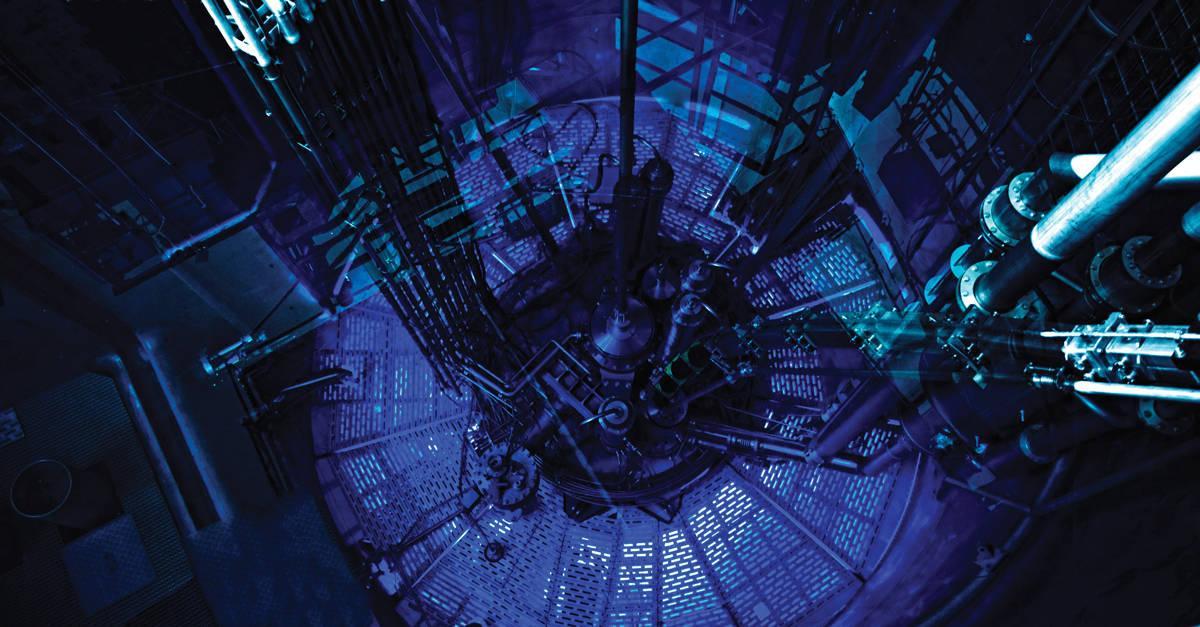
Neutrons are constituents of matter of great interest for nuclear and particle physics. In addition, their unique fundamental characteristics (mass, no charge, non-zero magnetic momentum) turn them into very useful probes for analyzing the structure of matter. Low energy neutrons have an intrinsic De Broglie wavelength of the order of magnitude of atoms and molecules, thus becoming great tools to understand the crystalline structure of materials, or the complex structures of biological macromolecules as proteins or the DNA. In addition, their energy lies in the range of the dynamics of such systems, enabling the unveiling the nature of processes spanning from solid state physics to molecular biology. Such research requires from powerful neutron sources such as the Institut Laue-Langevin (ILL, Grenoble, France), host of the highest-intensity neutron source for research, and the European Spallation Source (ESS, Lund, Sweden), which will start operation in the near future. This seminar will show a broad picture of the use of neutrons in science at these
world-class facilities