
Links condivisione social

Seminar by Paolo Zanardi (U. of Southern California)

Data visualizzata da utente finale
Monday 15/12/2025 at 2pm
Paragrafo
Are there Mereological Quantum Phase Transitions?

We will speculate on the novel concept of mereological quantum phase transition (m-QPTs). Our framework is based on generalized tensor product structures (g-TPS), a parameter-dependent Hamiltonian, and a quantum scrambling functional. By minimizing the scrambling functional, one selects a g-TPS, enabling a pullback of the natural information-geometric metric on the g-TPS manifold to the parameter space. The singularities of this induced metric in the thermodynamic limit characterize the m-QPTs. We will illustrate this framework through analytical examples involving quantum coherence and operator entanglement Ref: https://arxiv.org/abs/2510.06389 <https://arxiv.org/abs/2510.06389>

Sede evento
Seminar Room A109
Data inizio evento
Data fine evento
Periodo pubblicazione in HP
-
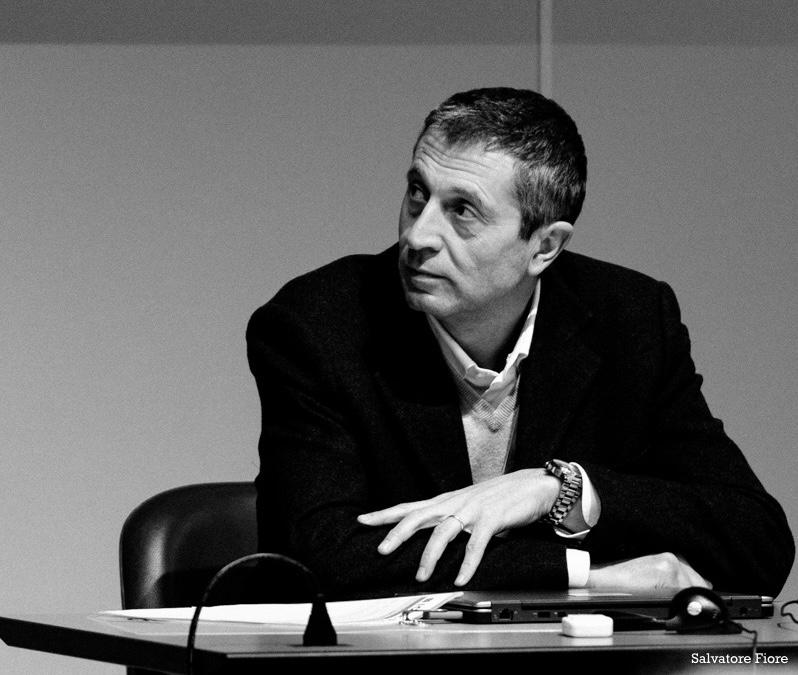
PhD Colloquium: Vincenzo Patera (U. di Roma "La Sapienza")

Data visualizzata da utente finale
Thursday 20 November at 4pm
Paragrafo
The Nuclear Hospital: High-Energy Physics at the Service of Medicine
Image
Vincenzo Patera

The intersection between Nuclear and Particle Physics and Medical Diagnosis and Therapy represents one of the most significant areas of innovation in applied science. While often unseen by the patient, technology based on nuclear phenomena is a crucial component of modern medicine.
This seminar will explore the essential and dynamic role of nuclear physics within the hospital environment. We will address fundamental questions that connect basic research to clinical applications: In what ways do radiations emitted by unstable nuclei facilitate the diagnosis of complex pathologies? What is the function of antimatter in modern imaging methods (such as PET)? How can nuclear decays and the use of heavy ion beams (hadron therapy) be engineered for the targeted treatment of tumors, improving therapeutic efficacy while reducing damage to healthy tissues?
The colloquium aims to unveil this scientific connection, often overlooked, between the world of fundamental physics research and the clinical infrastructure, tracing a path from the accelerator laboratory to the delivery of advanced therapies in oncological treatment centres.

Sede evento
Seminar Room A101
Data inizio evento
Data fine evento
Periodo pubblicazione in HP
-
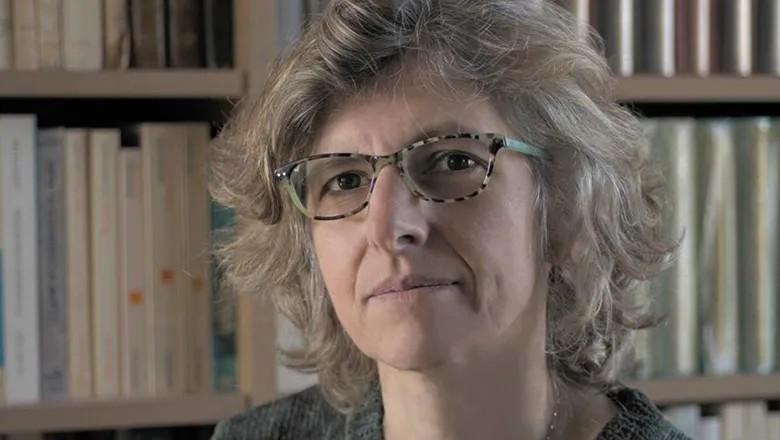
Opening PhD Colloquium: Markus Aspelmeyer

Data visualizzata da utente finale
Wednesday 22 October 2025 at 4:30 pm
Paragrafo
How does a quantum object gravitate?

No experiment today provides evidence that gravity requires a quantum description. The growing ability to achieve quantum optical control over massive solid-state objects may change that situation -- by enabling experiments that directly probe the phenomenology of quantum states of gravitational source masses.
This can lead to experimental outcomes that are inconsistent with the predictions of a purely classical field theory of gravity. Such “quantum Cavendish” experiments require to explore extreme regimes of both quantum and gravity phenomena, specifically: delocalised motional quantum states of sufficiently massive objects, as well as gravity experiments on the microscopic scale. This seminar reviews the current status in the lab and the challenges to be overcome for future experiments.

Sede evento
Aula Golgi, Palazzo Botta
Data inizio evento
Data fine evento
Periodo pubblicazione in HP
-
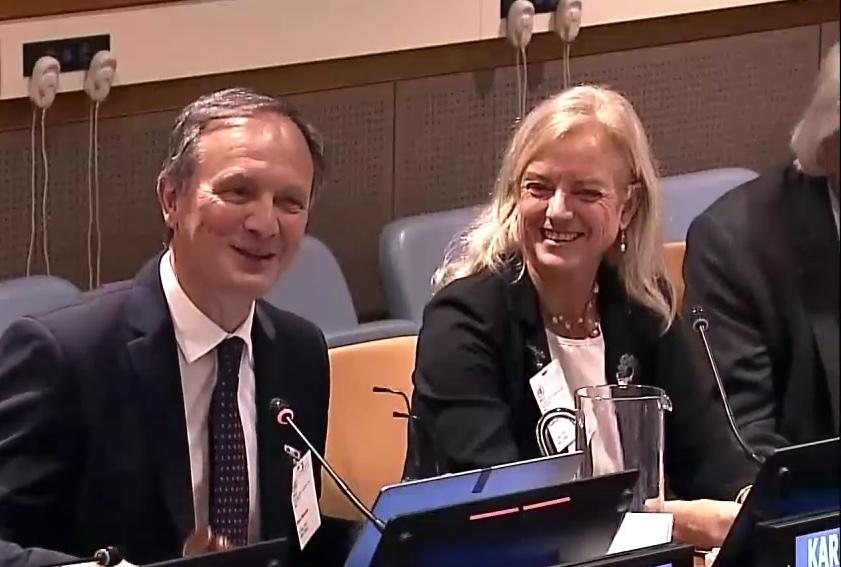
PhD Colloquium: Mairi Sakellariadou (King's College London)

Data visualizzata da utente finale
Thursday 22 May 2025 at 4pm
Paragrafo
The wonders of the Universe: a guided tour
Image
Mairi Sakellariadou

Looking at the starry sky, several questions come to our mind, such as "What is the Universe made of?", "How was it created?", "What, if anything, happened before the Big Bang?", "How does the Universe evolve and what is its ultimate fate?". To address these puzzling questions, we need a blend of theoretical developments and observational data. This seminar will discuss the observational and experimental tools we have at our disposal, as well as the two pillars of theoretical physics, namely General Relativity and Quantum Mechanics. Our current understanding of the early universe will be discussed, and the need for a fundamental theory, dubbed Quantum Gravity, will be highlighted, in order to resolve the remaining open questions.

Sede evento
Seminar Room A101
Data inizio evento
Data fine evento
Periodo pubblicazione in HP
-
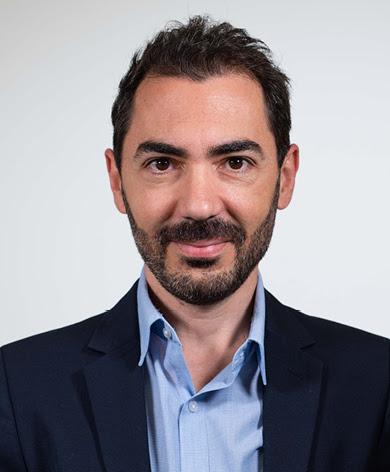
Seminario di Karen Hallberg e Maurizio Bona

Data visualizzata da utente finale
29th of May, 16:30h
Paragrafo
Science, peace, and security from the scientists, and citizens, perspectives
Image
Karen Hallberg and Maurizio Bona

International security and peace are very serious concerns in these days full of conflicts and marked by unpredictable political, economic and social changes. The role science can play in such a tensed global scenario is a complex one. Beside the contribution it can give to promoting dialogue and peace, it can also make available knowledge and instruments that may be used to offend, ranging from application of AI for new kinds of armaments to the development of even more destructive nuclear weapons. Since its creation the Pugwash institution, which earned the Nobel Peace Prize in 1995, is very active to “develop and support the use of scientific, evidence-based policymaking, focusing on areas where nuclear and mass destruction weapons risks are present”. Participating remotely via videoconference, Karen Hallberg, the present Secretary General of Pugwash, will present an overview of Pugwash’s action, with focus on the most critical topics the organization is presently dealing with and on the solutions it proposes to reduce global security threats and the danger of armed conflicts. The presentation is in the context of the course “Sciences, diplomacy and policymaking for a sustainable future” given by Maurizio Bona, who will initiate and moderate a dialogue with Karen Hallberg after her presentation, with the participation of the audience.

Document
Sede evento
Room 101
Data inizio evento
Data fine evento
Periodo pubblicazione in HP
-

PhD Colloquium: Amedeo Balbi (Università degli Studi di Roma "Tor Vergata")

Data visualizzata da utente finale
Thursday 3 April 2025 at 4 pm
Paragrafo
The physics of habitable worlds
Image
Speaker

The study of habitable worlds has become a central focus in modern astrophysics, propelled by the discovery of exoplanets, the search for life beyond Earth, and the quest to understand the conditions necessary for supporting life. This colloquium will provide an overview of the current state of the art in this highly interdisciplinary field, emphasising the intricate balance of factors that determine planetary habitability. Key physical principles such as stellar properties, atmospheric composition, climate dynamics, and the influence of galactic environments will be discussed, along with the methods used to assess and characterize these conditions across a range of exoplanets.

Sede evento
Seminar Room A101
Data inizio evento
Data fine evento
Periodo pubblicazione in HP
-

PhD Colloquium: Amedeo Balbi (U. di Roma Tor Vergata)

Data visualizzata da utente finale
Thrusday 03 April 2025 at 4pm
Paragrafo
The physics of habitable worlds

The study of habitable worlds has become a central focus in modern astrophysics, propelled by the discovery of exoplanets, the search for life beyond Earth, and the quest to understand the conditions necessary for supporting life. This colloquium
will provide an overview of the current state of the art in this highly interdisciplinary field, emphasising the intricate balance of factors that determine planetary habitability. Key physical principles such as stellar properties, atmospheric composition, climate dynamics, and the influence of galactic environments will be discussed, along with the methods used to assess and characterize these conditions across a range of exoplanets.

Sede evento
Seminar Room A101
Periodo pubblicazione in HP
-

PhD Colloquium: Maria Giuseppina Bisogni (Università & INFN di Pisa)

Data visualizzata da utente finale
Thursday 20 March 2025 at 4pm
Paragrafo
FLASH Radiotherapy: Advances, Challenges, and Future Directions in Ultra-High Dose Rate Cancer Treatment
Image
Maria Giuseppina Bisogni

FLASH radiotherapy (FLASH-RT) is an innovative cancer treatment that delivers ultra-high dose rates (≥40 Gy/s) in less than 200 ms. This irradiation modality elicits a biological effect called FLASH effect, that significantly reduces damage to normal tissues while maintaining tumor control. Despite promising preclinical results, the precise mechanisms underlying this effect remain unclear, with hypotheses including transient oxygen depletion and reactive oxygen species dynamics. The clinical implementation of FLASH-RT faces challenges such as compact radiation sources, accurate dosimetry and reliable equipment for beam monitoring and delivery. This seminar reviews the latest advancements, technological challenges and future directions for FLASH-RT in clinical practice.

Sede evento
Seminar Room A101
Data inizio evento
Data fine evento
Periodo pubblicazione in HP
-

Seminar by Marco Cipriani

Data visualizzata da utente finale
20 february 2025, at 2:30 pm
Paragrafo
Measurement of the W-boson mass at CMS
Image
Speaker
Document
Sede evento
Sala riunioni INFN
Data inizio evento
Data fine evento
Periodo pubblicazione in HP
-