Links condivisione social

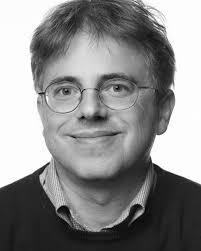
PhD Colloquium: Andrea Cavalleri (Max Planck Institute for the Structure and Dynamics of Matter, Hamburg and Department of Physics, University of Oxford)

Data visualizzata da utente finale
Thursday 12 December 2024 at 4pm
Paragrafo
New Physics in Driven Quantum Materials
Image
Cavalleri

In this seminar, how coherent electromagnetic radiation at Tera-Hertz and mid-infrared frequencies can be used to drive complex solids, in an attempt to enhance their coherence, is discussed.
As collective excitations are driven nonlinearly, leading to coupling amongst otherwise virtually non-interacting normal modes of the material. Driving gives rise to non-thermal states with unconventional properties, and sometimes with emergent order. Interesting examples involve the nonlinear control of the crystal lattice, used to induce magnetic order, ferroelectricity and non-equilibrium superconductivity at high temperatures.

Sede evento
Seminar Room A101
Data inizio evento
Data fine evento
Periodo pubblicazione in HP
-

Seminar by David O'Connell (OIST)

Data visualizzata da utente finale
13 November 2024 at 2:30pm
Paragrafo
Quantum Fields on a non-Hausdorff background

In this talk I will overview an ongoing project which revolves around the problem of defining QFTs on a non-Hausdorff spacetime. After a brief review of the locally-covariant formalism for QFT on curved spacetimes, we will spend some time understanding the “adjunction formalism” of non-Hausdorff differential geometry. In particular, we will see that ordinary globally-hyperbolic spacetimes can be “glued together” in order to describe non-Hausdorff spacetimes that exhibit topology change. Interestingly, this is in stark contrast to the usual version of topology change: in the non-Hausdorff case, our spacetime will be covered by a preferred set of globally-hyperbolic (Hausdorff) submanifolds, which doesn’t happen in the Hausdorff case. Once this observation is understood, we will see that the formalism of non-Hausdorff geometry seems to naturally cohere with locally covariant QFT: the QFTs on a non-Hausdorff spacetime can be described by “gluing together” QFTs defined on maximal globally-hyperbolic Hausdorff submanifolds. Time permitting, we will finish with an example of the Klein-Gordon field on a non-Hausdorff background, as well as some interesting observations for the near-future.

Sede evento
Aula Dottorato
Data inizio evento
Data fine evento
Periodo pubblicazione in HP
-

Seminar by Giuliano Benenti (U. dell'Insubria)

Data visualizzata da utente finale
Friday 04 October 2024 at 3pm
Paragrafo
Dynamical blockade of a reservoir for optimal performances of a quantum battery

The development of fast and efficient quantum batteries is crucial for the prospects of quantum technologies. We show that both requirements are accomplished in the paradigmatic model of a harmonic oscillator strongly coupled to a highly non-Markovian thermal reservoir. At short times, a dynamical blockade of the reservoir prevents the leakage of energy towards its degrees of freedom, promoting a significant accumulation of energy in the battery with high efficiency. The evolution of the energy stored in the battery is almost periodic, which allows to avoid a too precise fine-tuning of the time at which the battery need to be disconnected from the charger. Moreover, our protocol is very efficient, allowing in principle to extract through unitary operations practically all the energy stored in the quantum battery, with a ratio between the energy that can be extracted and the work done by the charger which approaches the ideal unit limit. Our protocol may be envisioned with a quantum LC circuit playing the role of the battery and with the required environment being suitably engineered via state–of–the–art quantum circuits.

Sede evento
Aula Dottorato
Data inizio evento
Data fine evento
Periodo pubblicazione in HP
-

Seminar by Stefano Azzini (U. of Trento)

Data visualizzata da utente finale
Monday 27 May 2024 at 5pm
Paragrafo
Photonic integrated circuits for quantum information processing tasks

Future quantum information technologies have already found in integrated photonic platforms an excellent candidate in terms of robustness, scalability, complexity and overall integrability. At the Nanoscience Laboratory of the University of Trento, we design and experimentally study circuits for photons on a chip to harness the power of entanglement and interference for diverse quantum information processing tasks. In this talk, I will discuss a few research results to which I contributed over the past five years. First, I will introduce single-photon entanglement [1] and present how it can be exploited to generate quantum-certified random numbers using on-chip path-entangled single photons from an LED [2]. Second, I will show how qudits encoded in the path of single photons from an attenuated laser can be successfully employed to implement the first, to the best of our knowledge, photonic swap test circuit [3], an algorithm returning the inner product of two quantum states. Third, I will present some results related to our efforts toward the realization of a room-temperature quantum photonic integrated platform at visible-to-near infrared wavelengths [4]. Finally, I will conclude with some perspectives about our ongoing works and interests.


References

[1] S. Azzini, et al., Single-Particle Entanglement, Adv. Quantum Technol., 3: 2000014 (2020).

[2] N. Leone, et al., Generation of quantum-certified random numbers using on-chip path-entangled single photons from an LED, Photon. Res. 11, 1484-1499 (2023).

[3] A. Baldazzi, et al., A linear swap test circuit for quantum kernel estimation, arXiv preprint arXiv:2402.17923 (2024).

[4] M. Sanna, et al., SiN integrated photonic components in the visible to near-infrared spectral region, Opt. Express 32, 9081-9094 (2024).

Sede evento
Aula Dottorato
Data inizio evento
Data fine evento
Periodo pubblicazione in HP
-

PhD Colloquium: Borut Kersevan

Data visualizzata da utente finale
16 May 2024 at 4pm
Paragrafo
Application of Machine Learning in High Energy Physics: past, present and future
Image
Speaker

This seminar presents the diverse use of Machine Learning tools and approaches in High Energy Physics. It focuses on the practices of the experiments at the Large Hadron Collider (LHC) at CERN. The LHC experiments use Machine Learning in a wide range of applications. These range from straightforward procedures of trying to differentiate the new physics and known processes in data analysis using e.g. deep neural networks, to using Machine Learning to replace traditional Monte Carlo simulation of physics processes.
State-of-the-art attempts comprise using programmable FPGA chips to implement very fast Machine Learning tools in detector operations, exploring the use of Machine Learning algorithms on Quantum Computers, employ Artificial Intelligence approaches to design the new generations of experiments, solve theoretical equations, etc...
Special emphasis will be given to the implementation of the transfer of latest commercial approaches, such as generative modelling, into scientific procedures with advantages they bring as well as associated caveats. Finally, a speaker’s vision of the future of Machine Learning in HEP will be given.

Sede evento
Room 101
Data inizio evento
Data fine evento
Periodo pubblicazione in HP
-

Seminari by Raffaele Resta (IOM-CNR, Trieste)

Data visualizzata da utente finale
Monday 13 May at 4pm
Paragrafo
Berry Phase and Geometrical Observables in Condensed Matter Physics

The paradigmatic geometrical observable is the macroscopic electric polarization P of a crystalline insulator: since the early 1990s it is known that P is a geometric phase of the ground-state wavefunction. The geometrical nature of several other observables has been elucidated over the years: most notably orbital magnetization and anomalous Hall conductivity. In some special cases a geometrical observable is quantized, and becomes therefore topological: extremely robust with respect to perturbations, and measurable in principle with infinite precision.


In this talk I will start explaining what “geometrical” means in quantum mechanics. Then I will outline the main features of P and of a few other observables.


The talk will be addressed to Master/PhD students as well as to researchers.

Sede evento
Seminar Room A102
Data inizio evento
Data fine evento
Periodo pubblicazione in HP
-

PhD Colloquium: Fabio Beltram

Data visualizzata da utente finale
18 April 2024 at 4pm
Paragrafo
Do-it-yourself quantum mechanics
Image
Fabio Beltram

Leo Esaki was awarded the Nobel prize in physics in 1973 for his pioneering studies on electron tunnelling: he coined the term “do-it-yourself quantum mechanics” a couple of decades after that. Since then, our toolkit for implementing this concept has expanded exponentially, advancing our ability to fabricate physical objects embodying virtually any Hamiltonian. Today we term all this quantum technology. In this conversation I shall discuss some of the trends within the solid-state realm. I aim to highlight that all this has been driven by the continuous development of few basic concepts and how this is still hindered by the lingering classical mindset and language being used.

Sede evento
Aula A102
Data inizio evento
Data fine evento
Periodo pubblicazione in HP
-