
Links condivisione social

PhD Colloquium: Nando Ferroni

Data visualizzata da utente finale
17th February, 16h
Paragrafo
Image
Fernando Ferroni

LIGO and VIRGO have opened a new way to observe the Universe through the detection of Gravitational Waves. The potentialities of this new field of research are immense. Black Hole physics, Neutron Star studies, Multimessenger astronomy, Nuclear Astrophysics, Cosmology.....

We have to move now from the observation of a bunch of events, the discovery phase, to the ability of detecting so many of them in order to have a complete description of the landscape. A new, much more powerful interferometer, is needed.

In this seminar, the effort that will bring to the construction of a third generation instrument, Einstein Telescope, is described together with its physics reach.

Sede evento
Room A102
Data inizio evento
Data fine evento
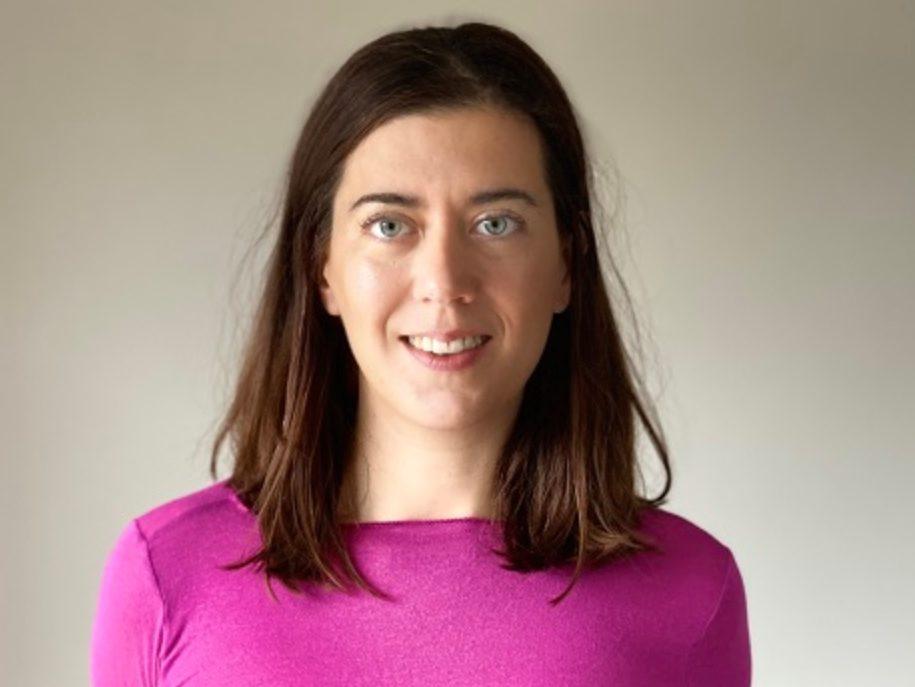
Seminar by Edoardo Baldini (U. of Texas - Austin)

Data visualizzata da utente finale
Friday 19 December at 11am
Paragrafo
Nonlinear Coupled Magnonics

Tailored light excitation and nonlinear control of lattice vibrations have emerged as powerful strategies to manipulate the properties of quantum materials out of equilibrium. Generalizing the use of coherent phonon-phonon interactions to nonlinear couplings among other types of collective modes would open unprecedented opportunities in the design of novel dynamic functionalities in solids. For example, the collective excitations of magnetic order –magnons– can carry quantum information with little energy dissipation, and their coherent and nonlinear control would provide an attractive route to achieve collective-mode-based information processing and storage in forthcoming spintronics and quantum information science.


In this talk, I will show that intense terahertz (THz) fields can initiate processes of magnon up-conversion and magnon mixing mediated by an intermediate magnetic resonance. By using a suite of advanced spectroscopic tools, including a newly demonstrated two-dimensional THz polarimetry technique, we unveil these anharmonic magnon coupling phenomena in a canted antiferromagnet. These results demonstrate a route to inducing desirable energy transfer pathways between coherent magnons in solids and pave the way for a new era in the development of ultrafast control of magnetism.

Sede evento
Aula Dottorato
Data inizio evento
Data fine evento
Periodo pubblicazione in HP
-

Workshop: Renormalization from Quantum Field Theory to Statistical Mechanics and Complex Systems

Data visualizzata da utente finale
12-13 January 2026 from 10am
Sede evento
Aula Goldoniana: Collegio Ghislieri
Data inizio evento
Data fine evento
Periodo pubblicazione in HP
-

PhD Colloquium: Samir Suweis (U. di Padova)

Data visualizzata da utente finale
Thursday 11 December at 4pm
Paragrafo
Physics of Ecological Systems

Understanding how complex ecological communities function, persist, and adapt is one of the grand challenges of contemporary science. Ecosystems involve interactions among countless organisms, each responding to a constantly changing environment. Yet, despite this apparent complexity, ecological systems often display strikingly regular, robust, and universal patterns.
This talk discusses how tools from statistical physics, complex systems theory, and effective modelling enable us to uncover the emergent properties of ecological communities and to bridge the gap between microscopic dynamics and macroscopic phenomena. The aim of the talk is to convey how a physics perspective can provide unifying principles for ecology, and how theoretical insights, when combined with data, can deepen our understanding on diversity and dynamics of ecological systems.

Sede evento
Seminar Room A101
Data inizio evento
Data fine evento
Periodo pubblicazione in HP
-

Seminar by Paolo Zanardi (U. of Southern California)

Data visualizzata da utente finale
Monday 15/12/2025 at 2pm
Paragrafo
Are there Mereological Quantum Phase Transitions?

We will speculate on the novel concept of mereological quantum phase transition (m-QPTs). Our framework is based on generalized tensor product structures (g-TPS), a parameter-dependent Hamiltonian, and a quantum scrambling functional. By minimizing the scrambling functional, one selects a g-TPS, enabling a pullback of the natural information-geometric metric on the g-TPS manifold to the parameter space. The singularities of this induced metric in the thermodynamic limit characterize the m-QPTs. We will illustrate this framework through analytical examples involving quantum coherence and operator entanglement Ref: https://arxiv.org/abs/2510.06389 <https://arxiv.org/abs/2510.06389>

Sede evento
Seminar Room A109
Data inizio evento
Data fine evento
Periodo pubblicazione in HP
-

PhD Colloquium: Vincenzo Patera (U. di Roma "La Sapienza")

Data visualizzata da utente finale
Thursday 20 November at 4pm
Paragrafo
The Nuclear Hospital: High-Energy Physics at the Service of Medicine
Image
Vincenzo Patera

The intersection between Nuclear and Particle Physics and Medical Diagnosis and Therapy represents one of the most significant areas of innovation in applied science. While often unseen by the patient, technology based on nuclear phenomena is a crucial component of modern medicine.
This seminar will explore the essential and dynamic role of nuclear physics within the hospital environment. We will address fundamental questions that connect basic research to clinical applications: In what ways do radiations emitted by unstable nuclei facilitate the diagnosis of complex pathologies? What is the function of antimatter in modern imaging methods (such as PET)? How can nuclear decays and the use of heavy ion beams (hadron therapy) be engineered for the targeted treatment of tumors, improving therapeutic efficacy while reducing damage to healthy tissues?
The colloquium aims to unveil this scientific connection, often overlooked, between the world of fundamental physics research and the clinical infrastructure, tracing a path from the accelerator laboratory to the delivery of advanced therapies in oncological treatment centres.

Sede evento
Seminar Room A101
Data inizio evento
Data fine evento
Periodo pubblicazione in HP
-

Opening PhD Colloquium: Markus Aspelmeyer

Data visualizzata da utente finale
Wednesday 22 October 2025 at 4:30 pm
Paragrafo
How does a quantum object gravitate?

No experiment today provides evidence that gravity requires a quantum description. The growing ability to achieve quantum optical control over massive solid-state objects may change that situation -- by enabling experiments that directly probe the phenomenology of quantum states of gravitational source masses.
This can lead to experimental outcomes that are inconsistent with the predictions of a purely classical field theory of gravity. Such “quantum Cavendish” experiments require to explore extreme regimes of both quantum and gravity phenomena, specifically: delocalised motional quantum states of sufficiently massive objects, as well as gravity experiments on the microscopic scale. This seminar reviews the current status in the lab and the challenges to be overcome for future experiments.

Sede evento
Aula Golgi, Palazzo Botta
Data inizio evento
Data fine evento
Periodo pubblicazione in HP
-