Salta al contenuto principale

Links condivisione social

Colloquium di Dottorato: Nando Ferroni

Data visualizzata da utente finale
17 febbraio, ore 16
Paragrafo
Immagine
Fernando Ferroni

LIGO and VIRGO have opened a new way to observe the Universe through the detection of Gravitational Waves. The potentialities of this new field of research are immense. Black Hole physics, Neutron Star studies, Multimessenger astronomy, Nuclear Astrophysics, Cosmology.....

We have to move now from the observation of a bunch of events, the discovery phase, to the ability of detecting so many of them in order to have a complete description of the landscape. A new, much more powerful interferometer, is needed.

In this seminar, the effort that will bring to the construction of a third generation instrument, Einstein Telescope, is described together with its physics reach.

Sede evento
Aula A102
Data inizio evento
Data fine evento
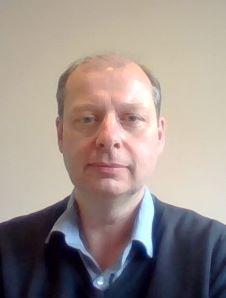
Seminario di Michal Wrochna (U. of Utrecht)

Data visualizzata da utente finale
Martedì 17 Marzo 2026 alle ore 14:30
Paragrafo
The Dirichlet-to-Neumann map for the wave equation on AdS spacetimes and holography

In the setting of the wave equation on asymptotically anti-de Sitter spacetimes, it is possible to define an operator which maps Dirichlet data of solutions to corresponding Neumann data at the conformal boundary. The Dirichlet-to-Neumann map (or the boundary-to-boundary propagator) is conjectured to determine the bulk metric up to trivial transformations. In this talk I will report on recent progress on this question, based on the proof that the Dirichlet-to-Neumann map is a fractional power for the boundary metric in a suitable sense. In particular I will discuss the case of Einstein AdS spaces in which case we can prove stronger statements (joint work with Alberto Enciso and Gunther Uhlmann).

Sede evento
Aula A109
Data inizio evento
Data fine evento
Periodo pubblicazione in HP
-

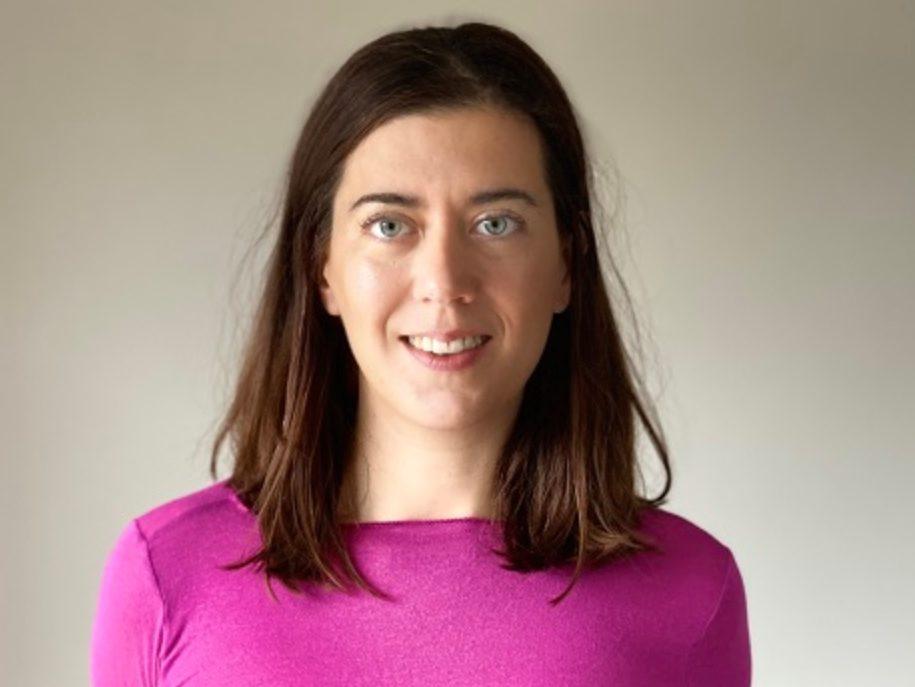
Colloquium di Dottorato: Simone Montagnero (U. di Padova)

Data visualizzata da utente finale
Mercoledì 18 Marzo 2026 alle ore 16:00
Paragrafo
Tensor network algorithms for quantum simulations and optimisations

This seminar will review recent advances in the development of efficient tree tensor network algorithms and their applications to quantum simulation, benchmarking, and theoretical interpretation [1,2].
In particular, results on two- and three-dimensional systems will be presented, both in and out of equilibrium, including scattering processes and induced false vacuum decay in the two-dimensional quantum Ising model [3]. It will further highlights the use of tree tensor network methods beyond traditional quantum simulation, such as addressing hard classical combinatorial problems through mappings to many-body quantum Hamiltonians, optimizing quantum compilation tasks, integer factorization and enabling quantum equational reasoning [4].
 

[1] Introduction to Tensor Network Methods, Simone Montangero Springer International Publishing
[2] Scattering and induced false vacuum decay in the two-dimensional quantum Ising model, Luka
Pavešić, Marco Di Liberto, Simone Montangero
arXiv:2509.02702
[3] Quantum algorithms for equational reasoning, Davide Rattacaso, Daniel Jaschke, Marco Ballarin, Ilaria Siloi, Simone Montenegro
arXiv:2508.21122
[4] Quantum inspired factorization up to 100-bit RSA number in polynomial time
Marco Tesoro, Ilaria Siloi, Daniel Jaschke, Giuseppe Magnifico, Simone Montangero
arXiv:2410.16355

Sede evento
Aula A102
Data inizio evento
Data fine evento
Periodo pubblicazione in HP
-

Masterclasses di Particle Physics e Particle Therapy

Data visualizzata da utente finale
11, 25 e 27 febbraio
Paragrafo
Ogni anno, piu' di 1300 studenti delle scuole superiori di oltre 60 Paesi partecipano ad una delle masterclasses organizzate dall'International Particle Physics Outreach Group (IPPOG), col supporto del CERN e, in Italia, dell'Istituto Nazionale di Fisica Nucleare (INFN).
 
I ricercatori di Pavia sono coinvolti da diversi anni nell'iniziativa delle masterclasses, realizzate anche in collaborazione con il Dipartimento di Fisica. In particolare aderiscono ai progetti "Hands on Particle Physics" e "Particle Therapy Masterclass".
Nel primo progetto, gli studenti e le studentesse hanno la possibilita' di partecipare ad un'attivita' formativa nell'ambito della fisica delle particelle e potranno capire come funziona la ricerca in fisica delle particelle analizzando direttamente i dati raccolti dai tre grandi esperimenti del Large Hadron Collider del CERN di Ginevra in cui i ricercatori pavesi sono coinvolti: ALICE, ATLAS e CMS.
L’altro progetto, in collaborazione con CNAO, è una masterclass di fisica medica, che permetterà agli studenti di scoprire come la ricerca in fisica possa aiutare la medicina, in particolare la radioterapia oncologica, familiarizzando con le tecniche usate per il trattamento dei tumori.
 
Le masterclasses si svolgeranno presso il Dipartimento di Fisica nei giorni 11, 25 e 17 febbraio.
Documento
Sede evento
Aule 103 (11/2) e 101 (25 e 27/2)
Data inizio evento
Data fine evento
Periodo pubblicazione in HP
-

Colloquium di Dottorato: Tom Lancaster (Durham University)

Data visualizzata da utente finale
Giovedì 19 Febbraio alle ore 16:00
Paragrafo
You'd better shape up: topological excitations in physics

If you throw a stone into a still pond then the wave set up on the surface of the water
dies away, both at a distance far from the initial disturbance and after a relatively short
interval of time. However, some waves in Nature are not like this. They are, instead,
localised in space and trapped in existence for long periods, their removal costing a great
deal of energy. There are many examples of these long-lived, wave-like topological objects
in physics such as magnetic domain walls, vortices, and skyrmions [1,2]. Recently, many
more have been discovered, including more exotic textures known as hopfions, torons and
blochions. Topology, the study of the shapes of objects, provides an organising principle
to understand the existence and extraordinary properties of these objects. Topology also
allows us to understand and classify large families of unusual quantum-mechanical states
of materials.
In this lecture, we will discuss the existence of topological excitations based on ideas
from symmetry breaking in phase transitions. We will see how topological objects occur
in magnetic materials, where they can be readily measured and visualized. Finally, we will
see how these ideas can be applied to a pressing problem: the possible fate of the
Universe!
[1] Lancaster, T. (2019). Skyrmions in magnetic materials. Contemporary Physics, 60(3),
246–261. https://doi.org/10.1080/00107514.2019.1699352
[2] Lancaster, T. and Blundell, S.J. (2015) Quantum Field Theory for
the Gifted Amateur (OUP, Oxford).

Sede evento
Aula 101
Data inizio evento
Data fine evento
Periodo pubblicazione in HP
-

Colloquium di Dottorato di Raffaele Santagati (Quantum Lab, Boehringer Ingelheim, Germany)

Data visualizzata da utente finale
Giovedì 22 Gennaio alle ore 16:00
Paragrafo
Drug Design on quantum computers
Documento
Sede evento
Aula A101
Data inizio evento
Data fine evento
Periodo pubblicazione in HP
-