Salta al contenuto principale

Links condivisione social

Colloquium di Dottorato: Harald Paganetti (Massachusetts General Hospital and Harvard Medical School)

Data visualizzata da utente finale
Giovedì 17 Ottobre 2024 alle ore 16:00
Paragrafo
Radiation Oncology: Where Physics Meets Cancer Therapy
Immagine
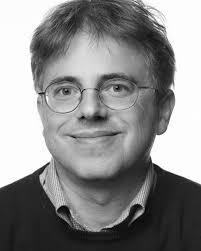
Harald Paganetti

In radiation oncology, physics has always played a critical role in shaping precise and effective cancer treatments. By harnessing the principles of radiation physics, we can accurately target cancer cells while minimizing damage to healthy tissue, providing patients with cutting-edge therapeutic options. In recent years, this traditional role of physicists in radiation oncology research has changed as the field has become more interdisciplinary, with physicists, biologists and clinicians working together.
As a result, physics research has evolved to incorporate biological mechanisms. This talk will provide examples of how physicists are using biophysical modelling and mathematical tools to bridge the gap between the "bottom" (fundamental radiation physics) and the "top" (clinically observed effects in patients) in both bottom-up and top-down approaches.

Sede evento
Aula Volta, Palazzo Centrale
Data inizio evento
Data fine evento
Periodo pubblicazione in HP
-

Seminario di Costantino De Angelis

Data visualizzata da utente finale
26 Settembre, ore 10:00
Paragrafo
ANALOG COMPUTING WITH NONLINEAR FLAT OPTICS
Immagine
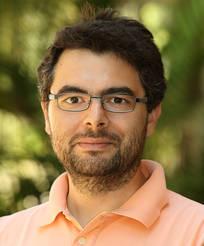
Foto relatore

Flat-optics devices exhibiting a linear local (LL) response are defined by a
position-dependent, linear transfer function, which can be locally tailored by engineering metaatoms arranged within metasurfaces. Spatial dispersion, i.e., nonlocality, is usually regarded as a nonideality in LL flat-optics devices. However, the nonlocal response of metasurfaces has been recently indicated as an effective means to achieve advanced functionalities [2]. Despite the advantages, linear approaches — both local and nonlocal — face limitations related to the restricted numerical aperture and frequency bandwidth. Here
we demonstrate that the combination of nonlinear and nonlocal effects in the same flat-optics device is a powerful strategy to achieve advanced image processing and analog computing functionalities with reduced structural complexity and increased efficiencies in terms of angular and frequency bandwidth [3].
[1] Hail, C.U., Foley, M., Sokhoyan, R. et al., Nat Commun 14, 8476 (2023).
[2] Overvig, A. and Alù, A., Laser Photonics Rev. 16, 2100633 (2022).
[3] de Ceglia, D., Alù, A., Neshev, D. N. and De Angelis, C., Opt. Mater. Express 14, 92 (2024).

Documento
Sede evento
Aula Dottorato
Data inizio evento
Data fine evento
Periodo pubblicazione in HP
-
Il contagio della fisica

Data visualizzata da utente finale
9-12 luglio 2024
Paragrafo

Corso di formazione e aggiornamento per docenti di matematica, fisica e scienze delle scuole secondarie superiori

Sede evento
Aula 101
Data inizio evento
Data fine evento
Periodo pubblicazione in HP
-
Seminario comunicazione della scienza, Giacomo Vallarino

Data visualizzata da utente finale
28 maggio 2024, ore 14:30
Paragrafo
Vivere (e far vivere) un Festival sui Social
Immagine
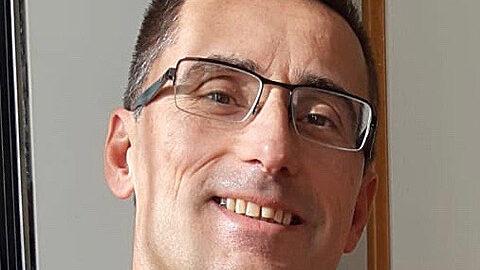
Giacomo Vallarino

Chi non ha mai partecipato ad un festival scientifico? Quasi tutti lo avranno fatto come pubblico, alcuni avranno contribuito come speaker o animatori e altri ancora nell’organizzazione. Ma esiste un ruolo intermedio che va a mediare tra pubblico, animazione, organizzazione e anche ufficio stampa: la figura del social media manager. Giacomo Vallarino, consulente di comunicazione social, porterà la sua esperienza di gestione social di festival e eventi, raccontando come si può impostare il lavoro, quali sono le principali difficoltà e le criticità (ma anche le soddisfazioni) e come è evoluta la comunicazione sulle piattaforme social nel corso degli anni, da Facebook a Instagram passando per LinkedIn fino ad arrivare, ovviamente, a TikTok.

Giacomo Vallarino

Sede evento
Sala riunioni INFN
Data inizio evento
Data fine evento
Periodo pubblicazione in HP
-
Seminario di Stefano Azzini (U. di Trento)

Data visualizzata da utente finale
27 maggio 2024, ore 17:00
Paragrafo
Photonic integrated circuits for quantum information processing tasks

Future quantum information technologies have already found in integrated photonic platforms an excellent candidate in terms of robustness, scalability, complexity and overall integrability. At the Nanoscience Laboratory of the University of Trento, we design and experimentally study circuits for photons on a chip to harness the power of entanglement and interference for diverse quantum information processing tasks. In this talk, I will discuss a few research results to which I contributed over the past five years. First, I will introduce single-photon entanglement [1] and present how it can be exploited to generate quantum-certified random numbers using on-chip path-entangled single photons from an LED [2]. Second, I will show how qudits encoded in the path of single photons from an attenuated laser can be successfully employed to implement the first, to the best of our knowledge, photonic swap test circuit [3], an algorithm returning the inner product of two quantum states. Third, I will present some results related to our efforts toward the realization of a room-temperature quantum photonic integrated platform at visible-to-near infrared wavelengths [4]. Finally, I will conclude with some perspectives about our ongoing works and interests.


References

[1] S. Azzini, et al., Single-Particle Entanglement, Adv. Quantum Technol., 3: 2000014 (2020).

[2] N. Leone, et al., Generation of quantum-certified random numbers using on-chip path-entangled single photons from an LED, Photon. Res. 11, 1484-1499 (2023).

[3] A. Baldazzi, et al., A linear swap test circuit for quantum kernel estimation, arXiv preprint arXiv:2402.17923 (2024).

[4] M. Sanna, et al., SiN integrated photonic components in the visible to near-infrared spectral region, Opt. Express 32, 9081-9094 (2024).

Sede evento
Aula Dottorato
Data inizio evento
Data fine evento
Periodo pubblicazione in HP
-

Presentazione del Master di II livello in Radioprotezione

Data visualizzata da utente finale
7 giugno 2024
Paragrafo

Venerdì 7 giugno 2024 verrà presentata la nuova edizione del Master di Radioprotezione di II livello, organizzato in collaborazione col Dipartimento.

Documento
Sede evento
Aula Volta, Palazzo Centrale dell'Università
Data inizio evento
Data fine evento
Periodo pubblicazione in HP
-

Colloquium di Dottorato: Borut Kersevan

Data visualizzata da utente finale
16 Maggio 2024 alle ore 16:00
Paragrafo
Application of Machine Learning in High Energy Physics: past, present and future
Immagine
Speaker

This seminar presents the diverse use of Machine Learning tools and approaches in High Energy Physics. It focuses on the practices of the experiments at the Large Hadron Collider (LHC) at CERN. The LHC experiments use Machine Learning in a wide range of applications. These range from straightforward procedures of trying to differentiate the new physics and known processes in data analysis using e.g. deep neural networks, to using Machine Learning to replace traditional Monte Carlo simulation of physics processes.
State-of-the-art attempts comprise using programmable FPGA chips to implement very fast Machine Learning tools in detector operations, exploring the use of Machine Learning algorithms on Quantum Computers, employ Artificial Intelligence approaches to design the new generations of experiments, solve theoretical equations, etc...
Special emphasis will be given to the implementation of the transfer of latest commercial approaches, such as generative modelling, into scientific procedures with advantages they bring as well as associated caveats. Finally, a speaker’s vision of the future of Machine Learning in HEP will be given.

Sede evento
Aula 101
Data inizio evento
Data fine evento
Periodo pubblicazione in HP
-

Stage - Physics 4 Teenagers

Data visualizzata da utente finale
Dal 11 al 21 giugno 2024
Paragrafo
Immagine
Stage 24

Si tratta di 10 giorni full-time, nel periodo appena successivo alla fine dell’anno scolastico, nei quali gli studenti potranno conoscere da vicino il mondo della ricerca in Fisica, vivendo a stretto contatto con fisici – docenti, ricercatori, studenti - in un clima stimolante e informale.

Sede evento
Dipartimento di Fisica
Data inizio evento
Data fine evento
Periodo pubblicazione in HP
-